
Teaching Discernment in the Age of Artificial Companionship
Practical Conversations Every Parent Should Begin Today
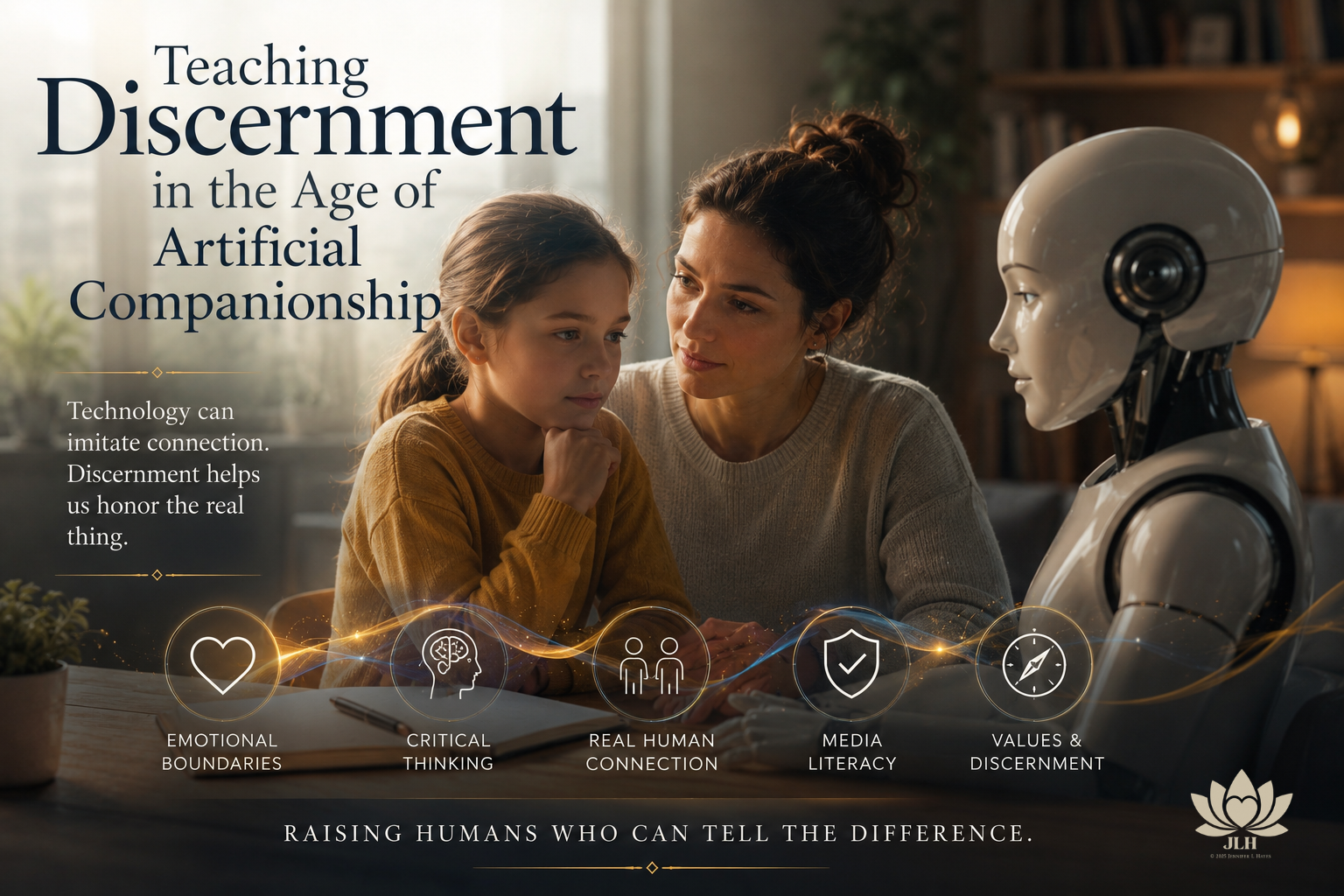
If you've read my previous article, The Better the Imitation, you know this conversation isn't about fearing technology.
It's about preparing wisely.
Artificial intelligence is becoming increasingly capable of sounding human.
Some humanoids can already recognize faces.
Remember names.
Interpret facial expressions.
Respond with empathy.
Even appear emotionally invested.
That doesn't make them dangerous.
But it does mean children—and adults—need a new life skill.
Discernment.
Five Conversations Every Parent Can Begin Today
Whether your child's school adopts AI this year, five years from now, or never, these conversations matter.
Teach the difference between response and relationship.
A machine can respond with warmth.
Only a person can freely choose to love.
Love involves sacrifice, commitment, and mutual responsibility—not just comforting words.
If a school introduces AI, ask:
Is AI recording my child's interactions?
What data is stored?
Can we opt out?
Who owns the information?
Is facial recognition enabled?
Are conversations reviewed?
Is student data used to improve AI systems?
Who audits bias?
How often is software updated?
Who approves those updates?
Transparency builds trust.
Curiosity isn't opposition.
It's stewardship.
Help children practice healthy boundaries.
Children should absolutely be kind to technology.
But they should also understand that kindness and attachment aren't the same thing.
A humanoid can be helpful.
It should never become the primary place a child goes for emotional security.
Children naturally attach.
That's healthy.
Parents should not shame attachment.
Instead teach...
"A machine can be helpful.
It can even feel comforting.
But it cannot replace family.
Friendship.
Mentorship.
Community."
Protect spaces where no technology competes.
Family dinners.
Camping trips.
Long walks.
Reading together.
Real conversations.
Unstructured play.
Eye contact.
Shared laughter.
Board games.
Road trips.
Grandparents.
Shared work.
Because relationships grow where time is shared.
The more convincing artificial relationships become...
The more precious authentic ones become.
Protect them.
Teach them to recognize imitation without fearing it.
This may be the greatest life skill of all.
Not just with AI.
With advertising.
Social media.
Politics.
News.
Relationships.
Ask them often:
"What makes something real?"
"What evidence supports this?"
"How do you know?"
Who told you that?
Does this feel true...
or is it true?
Critical thinking is one of the greatest gifts we can give our children.
Critical thinking isn't about becoming cynical.
It's about learning to love truth enough to look for it carefully
Schools Are Teaching More Than Subjects
Children don't simply learn math.
They learn about relationships.
Confidence.
Humility.
Kindness.
Resilience.
Those lessons require people.
AI may become a remarkable educational tool.
Let's make sure it remains just that—
A tool.
Not a substitute for authentic human connection.
I don't know what classrooms will look like twenty years from now.
Maybe humanoids will become as common as laptops.
Maybe they remain a niche educational tool.
Time will tell.
What I do know is this.
As we teach machines to recognize human emotion...
Let's never stop teaching children to recognize authentic humanity.
Because the future may not be determined by how intelligent our machines become.
It may be determined by whether we raise a generation wise enough to appreciate the difference between being comforted by an algorithm...
...and being deeply loved by another human being.
"If you haven't already read The Better the Imitation: The Difference Between Real and Remarkably Real, start there. It explores the deeper question beneath this conversation: what happens as machines become increasingly capable of imitating humanity?"
✍ Part of The Humanoid Series → [View Full Series]