
When Machines Start to Look Like Us
Biohybrids, Humanoids, and the Line We’re Quietly Crossing
There’s a particular kind of silence that follows a headline that doesn’t sit right.
Not loud fear.
Not panic.
Just that quiet pause in your chest that says:
“Something about this… deserves a second look.”
Lately, that pause has been showing up more often.
A humanoid robot standing beside Melania Trump at a White House event.
A viral post about a “living” robot built from biological tissue.
Clips, headlines, commentary—each one a little more dramatic than the last.
And somewhere in the noise, truth gets stretched… just enough to unsettle.
So let’s bring it back to center.
No hype. No fear tactics. Just clarity.
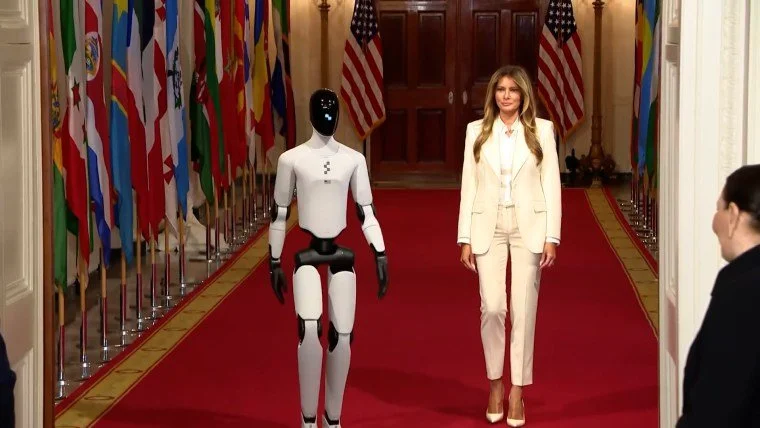
A moment that felt like it belonged in a movie—yet here it is, unfolding in real time. Not science fiction. Not the future. Just the very early steps of something still being defined.
The robot shown here is not “living,” and far from replacing human roles—but it represents the direction technology is beginning to explore.
What We’re Actually Looking At
Humanoid Robots
Humanoid robots are machines designed to look and move like humans.
They have:
Arms and legs
Cameras for “vision”
AI systems to process language and tasks
Some can:
Walk
Pick up objects
Hold basic conversations
But let’s be clear:
They are tools, not thinkers.
They do not understand the world—they process it.
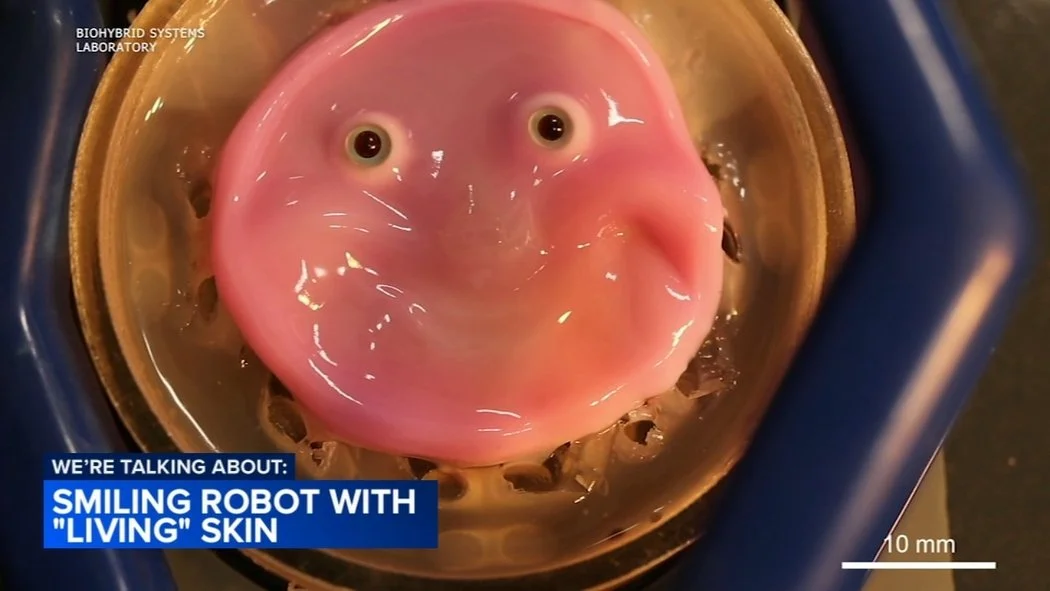
This is where things get… more interesting.
Biohybrids combine:
Living cells or tissue
withSynthetic structures or machines
Scientists have already created:
Tiny muscle-powered devices
Lab-grown tissues that contract and move
“Xenobots” made from frog cells that can self-organize
These systems can:
Respond to their environment
Perform simple tasks
Show limited self-repair
But they are:
Microscopic or extremely small
Fragile
Fully controlled in lab settings
Not modular. Not conscious. Not roaming the world.
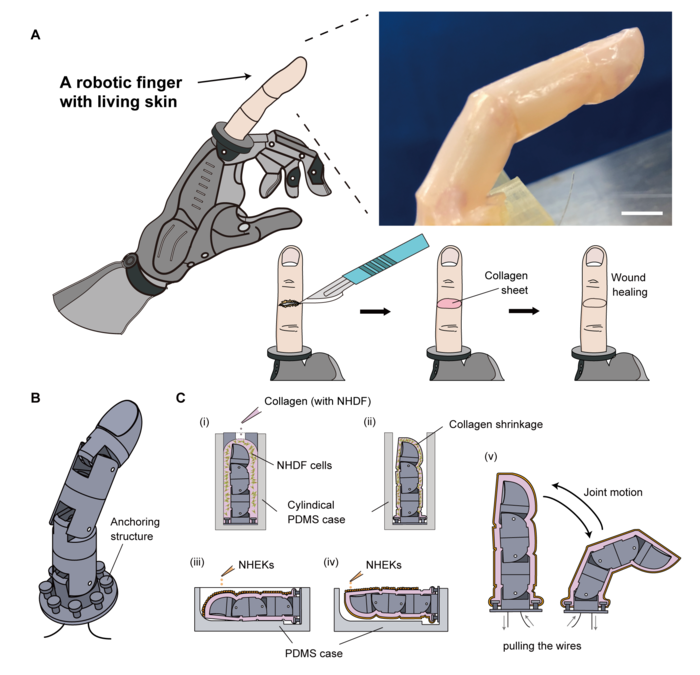
The Exciting Edge
Let’s not pretend there isn’t something remarkable here—because there is.
This kind of technology could mean:
Regenerative medicine that actually restores damaged tissue
Smarter prosthetics that move more naturally
Precision drug delivery inside the body
Assistive robotics for aging populations
Done right, this is not about replacing humanity.
It’s about supporting it.
Helping a body move again.
Helping someone stay independent longer.
Bridging gaps where the human system needs reinforcement.
That part?
That part is worth paying attention to.
The Part That Should Make You Pause
Not panic.
Pause.
Because the concern isn’t the robot itself.
It’s who builds it, who controls it, and how it’s used.⁉️
1. The Illusion of Reality (Deepfakes & Digital Humans)
We’re already in a world where:
Faces can be replicated
Voices can be cloned
Entire videos can be fabricated
Now imagine pairing that with:
Hyper-realistic humanoid forms
AI that can mimic speech patterns and behavior
The line between real and rendered doesn’t just blur…
It dissolves.
And when truth becomes negotiable,
power shifts quickly.
2. Authority Without Understanding
A machine can sound confident.
It can deliver information fluently.
But it doesn’t:
Feel responsibility
Understand nuance
Carry wisdom
If we begin to outsource:
education
guidance
decision-making
…to systems that simulate understanding without actually possessing it,
we risk trading discernment for convenience.
3. The Quiet Power Play
Technology is rarely neutral.
It follows:
Funding
Influence
Incentive
The question isn’t just:
“Can we build this?”
It’s:
“Who benefits if we do?”
Because the same tool that can:
educate
assist
heal
…can also:
manipulate
replace
control narratives
And history has shown—
those lines are rarely respected without pushback.
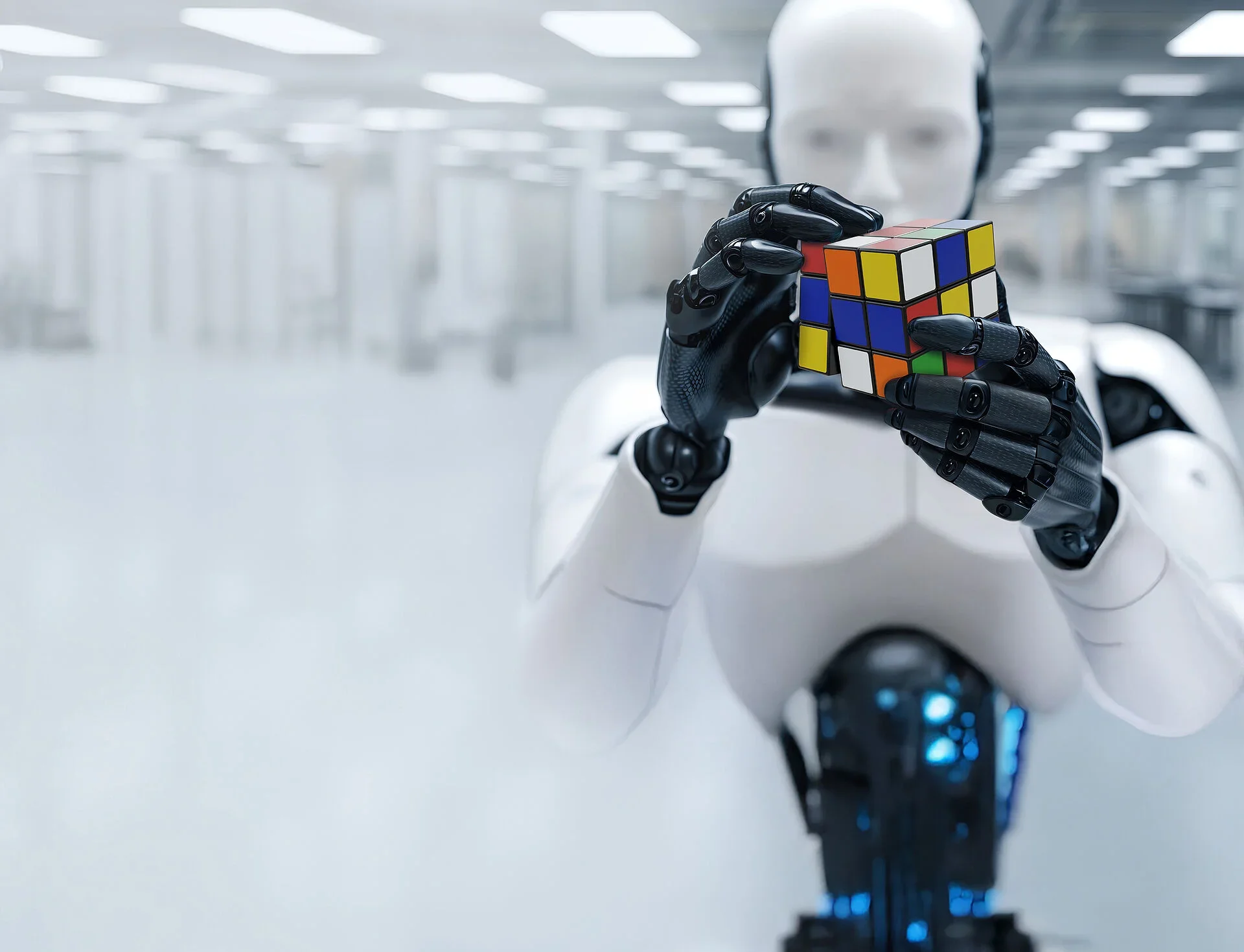
If we begin to outsource
to systems that simulate
understanding
without actually possessing it,
we risk trading discernment for convenience.
There’s a reason all of this feels… familiar.
Stories have been quietly preparing us for this moment long before the technology arrived.
A world where:
humans and machines coexist
some systems assist and protect
others manipulate and deceive
Not because the machines themselves are good or evil…
…but because of who is behind them.
We’ve seen helpful guides.
We’ve seen controlled enforcers.
We’ve seen machines used to serve… and machines used to dominate.
And maybe that’s the real takeaway:
We’re not stepping into a futuristic movie today.
But we are beginning to see the early sketches of a world that once only lived in storylines.
The difference?
This time, we’re not watching it unfold on a screen.
We’re living inside the opening scenes.

We’ve imagined this world before—where humans and machines walk side by side.
Some built to help. Some shaped by control.
The difference was never the machine… it was always who stood behind it.
So Where Are We Really?
Not in a sci-fi future.
Not in a robotic takeover.
We’re in a transitional moment—
where early-stage technology is being dressed in futuristic language.
The gap between:
what’s possible
andwhat’s being portrayed
…is still wide.
A Grounded Way Forward
You don’t need to fear this.
But you also don’t need to blindly trust it.
Stay curious.
Stay aware.
Stay rooted in what is real, tangible, human.
Because no matter how advanced technology becomes,
it still cannot replicate:
intuition
lived experience
the quiet knowing that something isn’t right
The Better Question
Maybe the question isn’t:
“Are robots becoming like us?”
Maybe it’s:
“Are we becoming too comfortable letting them?”
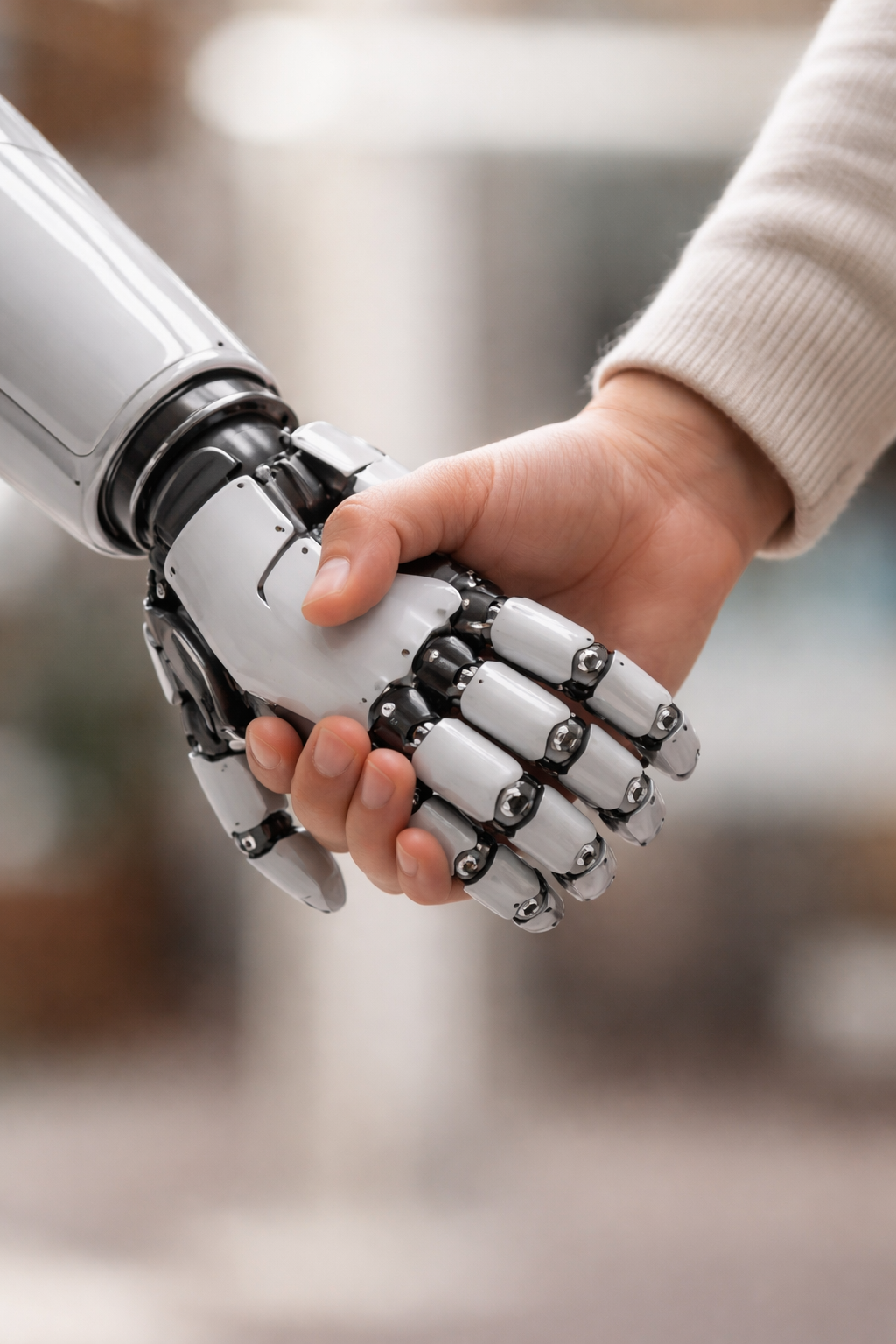
The Better Question
Maybe the question isn’t:
“Are robots becoming like us?”
Maybe it’s:
“Are we becoming too comfortable letting them?”
Final Thought
Progress isn’t the problem.
Disconnection is.
The more advanced our tools become,
the more anchored we need to be in what they are not.
And what they are not…
is human.
We’re living in a time where the lines are no longer bold and obvious.
They’re soft. Subtle. Easy to step over without realizing it.
Technology will keep advancing.
That part is certain.
But no machine—no matter how refined—
can replace the quiet wisdom of a human who pauses, questions, and chooses to stay aware.
So don’t be afraid of what’s coming.
Just don’t fall asleep inside it.
Stay grounded.
Stay curious.
Stay anchored to what is real.
Because the future isn’t just something we step into…
It’s something we shape—one decision, one moment of awareness at a time.
This is is where the conversation starts.
But the deeper question isn’t just what these systems are…
it’s what they may quietly be shaping.
👉 Continue reading: When Real Starts to Compete With Artificial
Part of The Humanoid Series → [View Full Series]
Jen 💙
If you’re interested in how technology intersects with the human body—healing, recovery, and performance—you’ll find more grounded, practical insights over at Fine Tuning Fitness.
